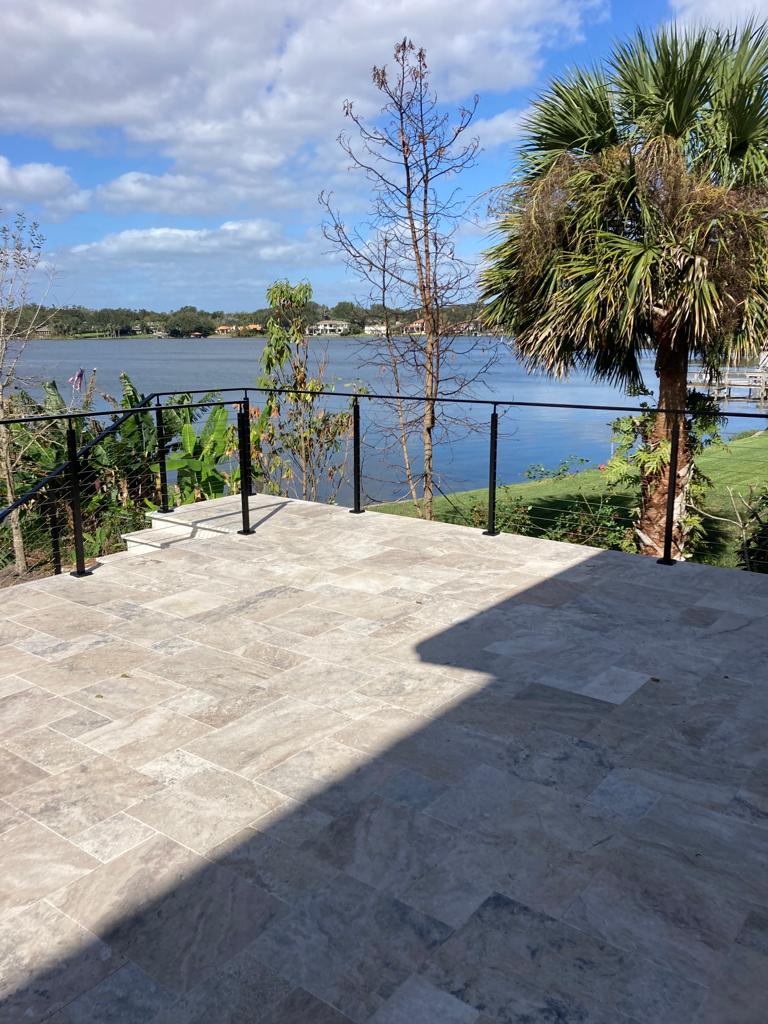
Cable Railing. Built for salt air.
316 marine-grade stainless cable, tensioned to specification on engineered posts — nearly invisible edge-on, and the guard we reach for first on exposed decks and waterfront terraces. Engineered, fabricated and installed statewide.
A guard you look through, not at.
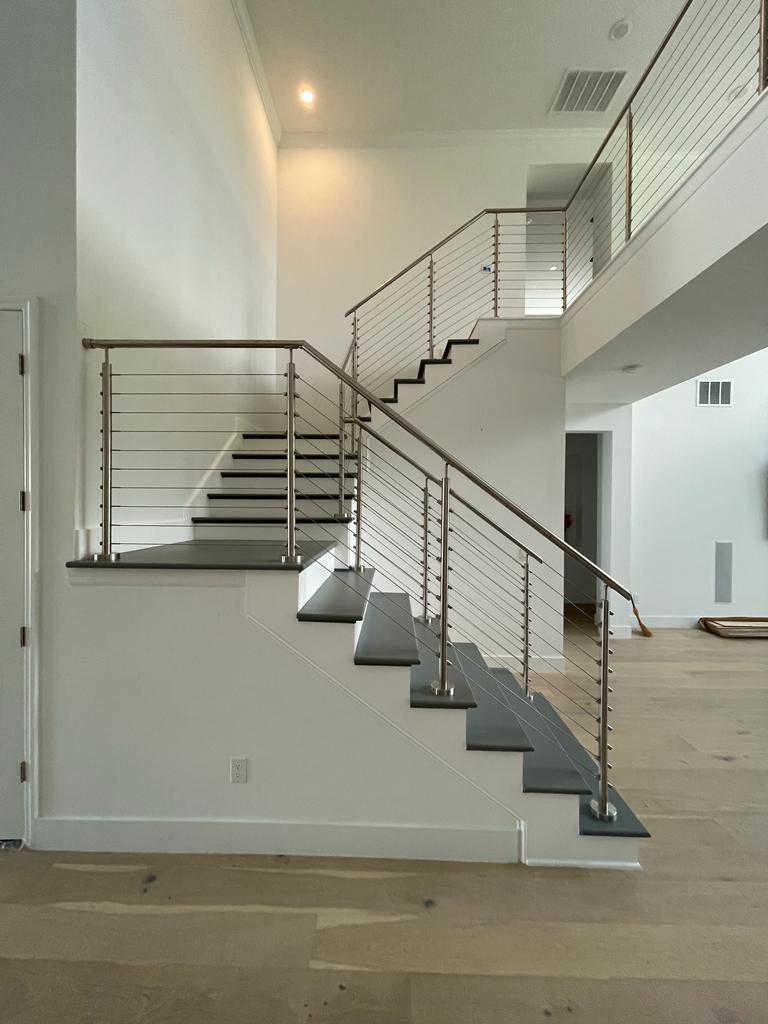
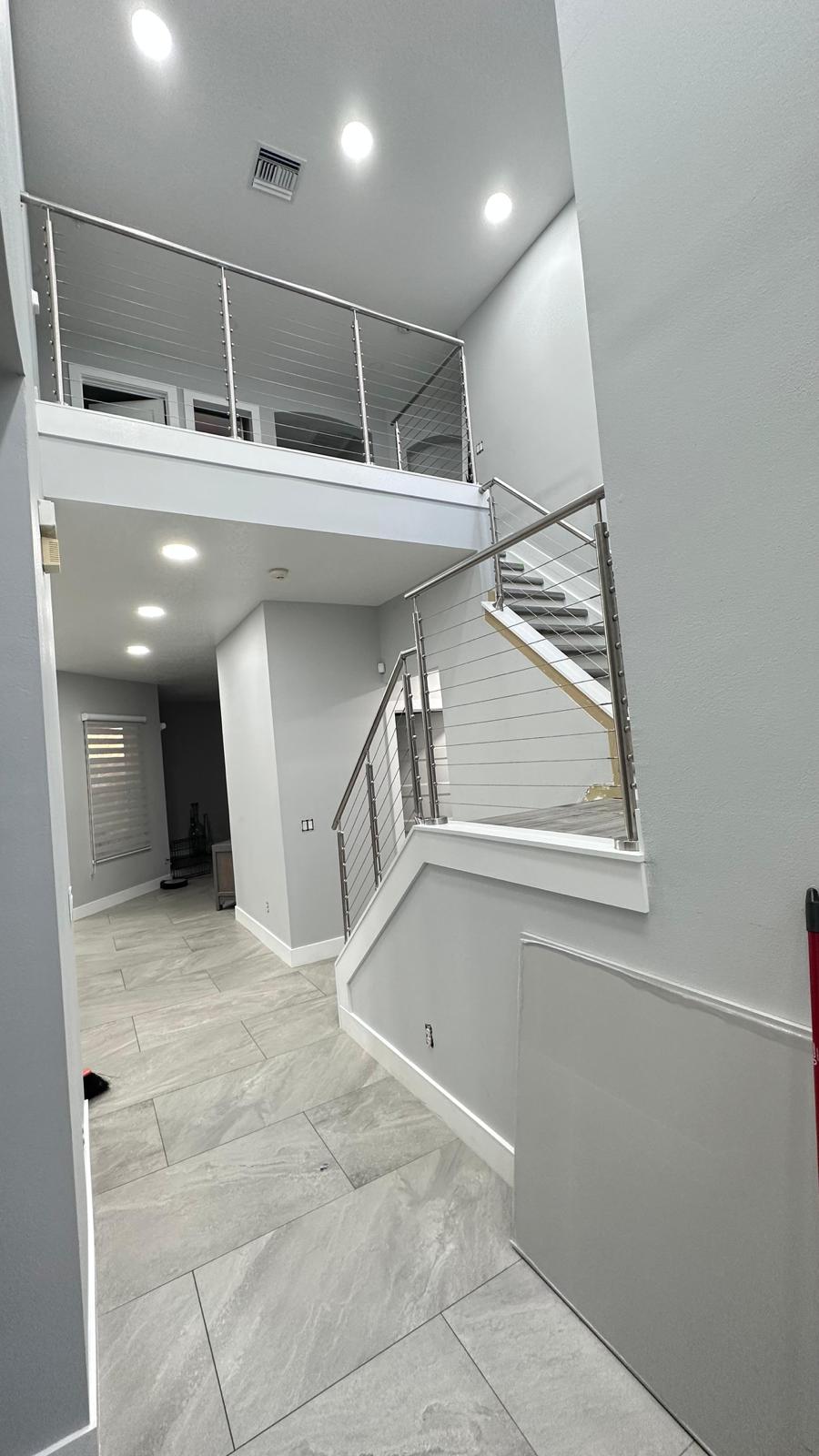
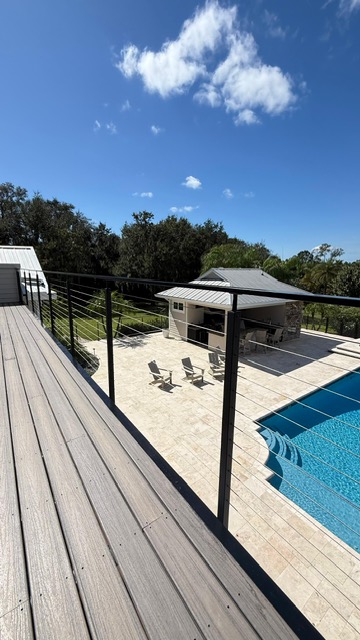
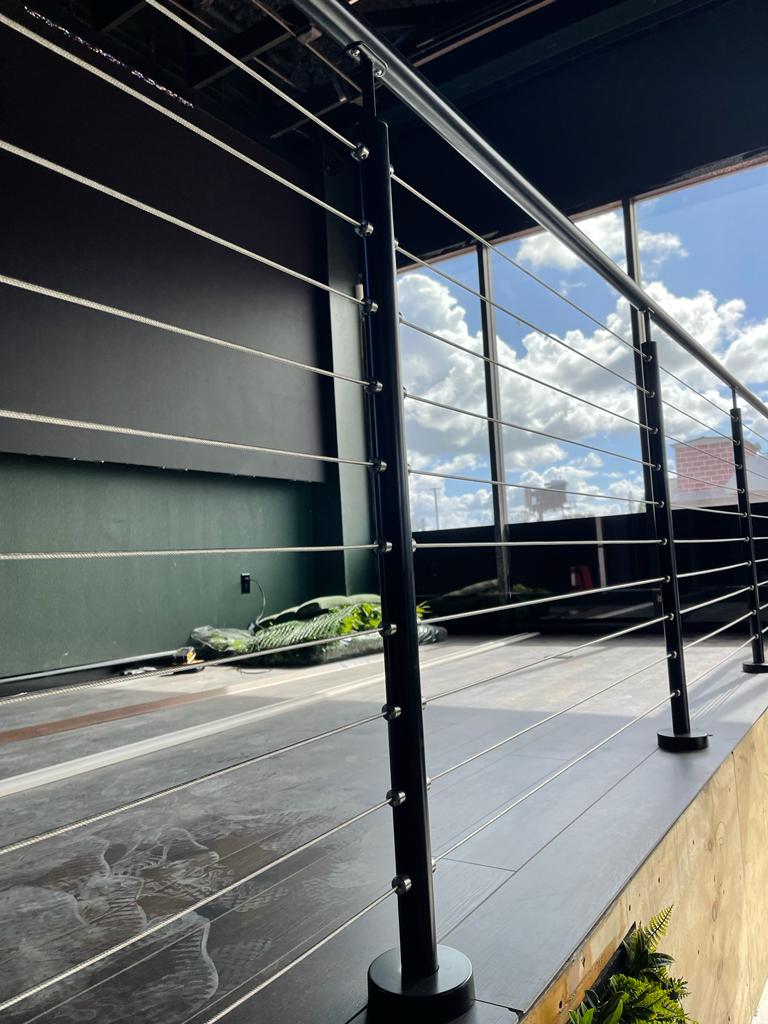
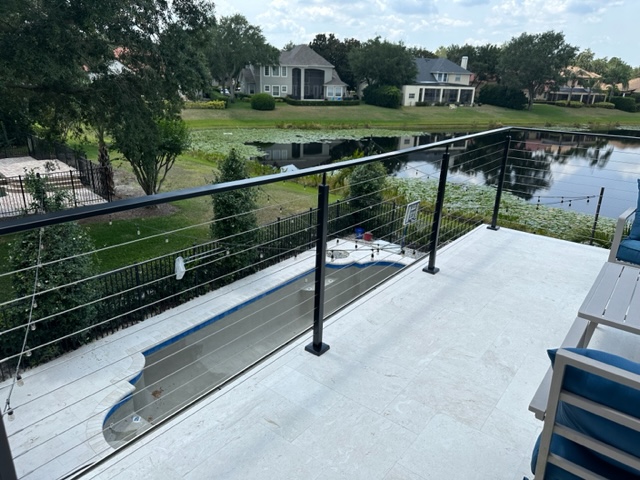
Cable railing is horizontal runs of stainless cable tensioned between structural posts. Viewed straight on you see fine lines; viewed at an angle the cables very nearly disappear. On a deck facing water, that is most of the reason to choose it.
It is also the most forgiving guard to build. Cable does not need the floor depth a frameless glass base shoe requires, it handles long runs and changes of direction easily, and it costs meaningfully less than glass over the same distance.
The part people underestimate is tension. Every cable in a run pulls on the terminal posts, and those forces accumulate. Under-size the end posts and the whole assembly slowly loses tension — which is exactly how cable railing earns its undeserved reputation for sagging.
Railing Max engineers post spacing, post section and cable tension together as one system, then tensions to specification at installation. We build statewide, with coastal specification standard on any project near salt water.
Three things that decide whether it lasts.
Cable railing is simple to describe and easy to get wrong. These are the variables that separate a ten-year guard from a two-year one.
316, Not 304
316 stainless carries molybdenum, which is what buys real resistance to chloride pitting. In Florida salt air, 304 can bloom rust and pit within a season. We specify 316 for cable, fittings, posts and every exposed fastener on coastal work.
Post Spacing
Code limits how far apart guard members can be, and cable can be pushed apart by hand if intermediate posts are too far apart. Spacing is engineered to keep the openings compliant under load, not just at rest.
Terminal Stiffness
Every cable transfers its tension into the end posts, and those loads add up fast. Terminal posts are sized for the accumulated pull of the full run — the single most common failure point in cable railing built without engineering.
Decks, stairs, terraces.
Cable is the most versatile guard we build, and on exposed exterior work it is usually the most sensible.
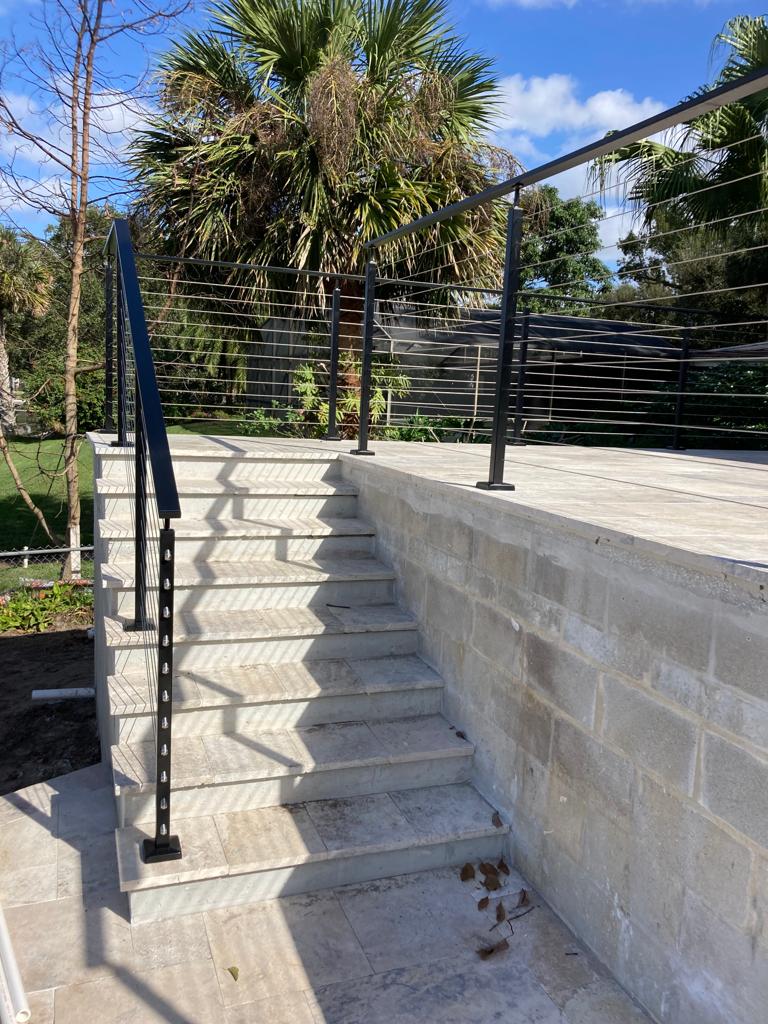
Built and installed.
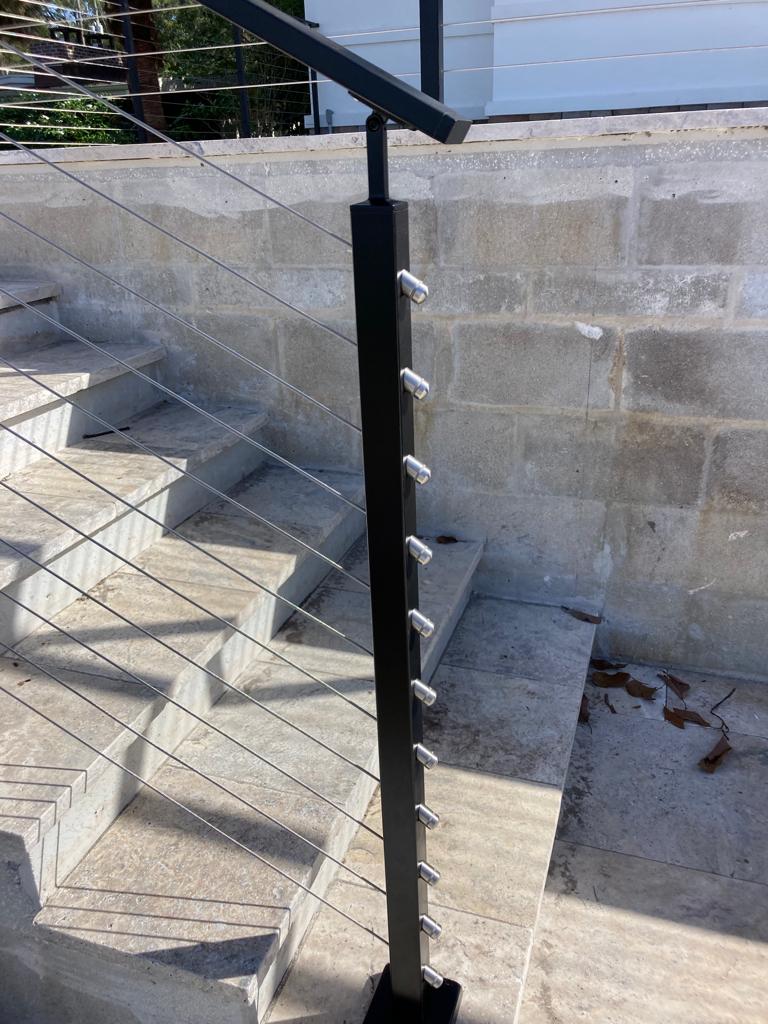 Built for Salt Air · 316 stainless on the coast
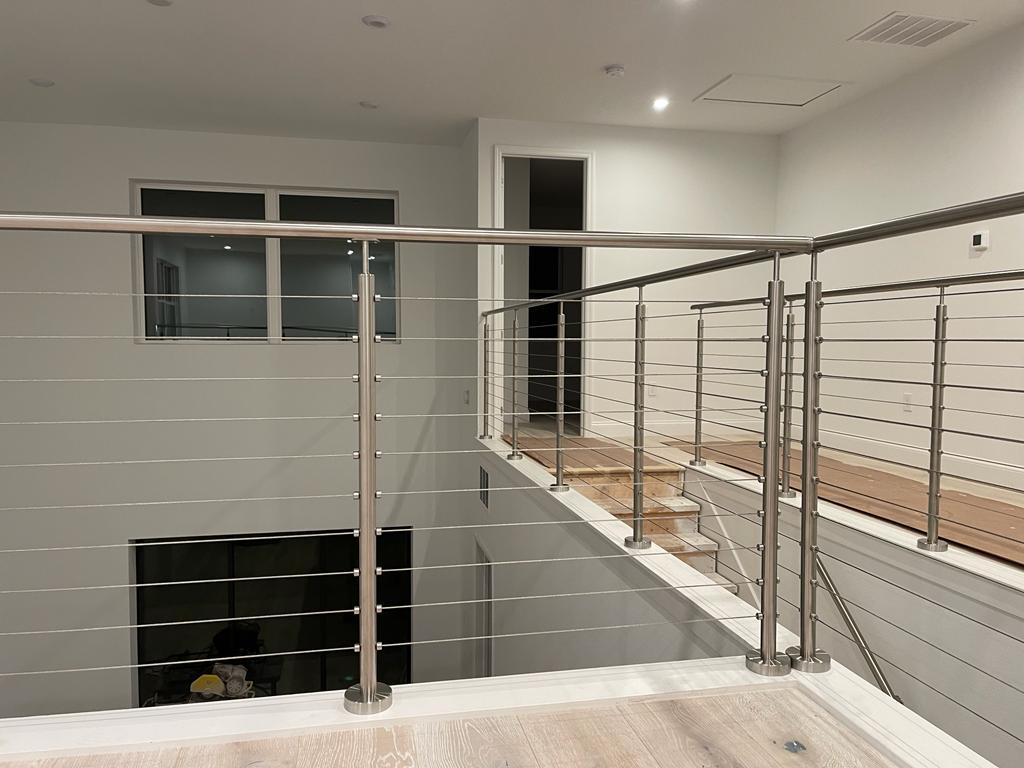 Engineered, Not Assembled · Stamped structural drawings
 Licensed Florida Contractor · CBC1270705
 Backed by Warranty · Every installation
 Our Own Crews · Install is never subcontracted
 Statewide Crews · Naples to the 30A corridor
 Shop Drawings First · Engineered before it's built
 Tensioned to Spec · No sagging, no warranty calls
 500+ Projects · Statewide track record
 Marine-Grade Hardware · Every exposed fastener, 316
Cable railing, answered.
Yes, when it is engineered. The Florida Building Code limits the opening between guard members, so cable spacing is set to prevent a sphere of the prohibited diameter passing through. Meeting that reliably depends on correct tension and on intermediate posts spaced closely enough that the cables cannot be spread apart by hand. We engineer post spacing and tension together rather than treating the cable as a trim item.
Properly engineered cable holds tension. Sagging almost always traces to two installation errors: posts spaced too far apart, or terminal posts not stiff enough to resist the accumulated tension of every cable pulling on them. Runs are tensioned to specification at installation, and a light check in the first season is normal.
316 contains molybdenum, which is what gives it real resistance to chloride pitting. In Florida salt air, 304 can develop rust bloom and surface pitting within a season. We specify 316 for cable, fittings, posts and every exposed fastener on coastal work.
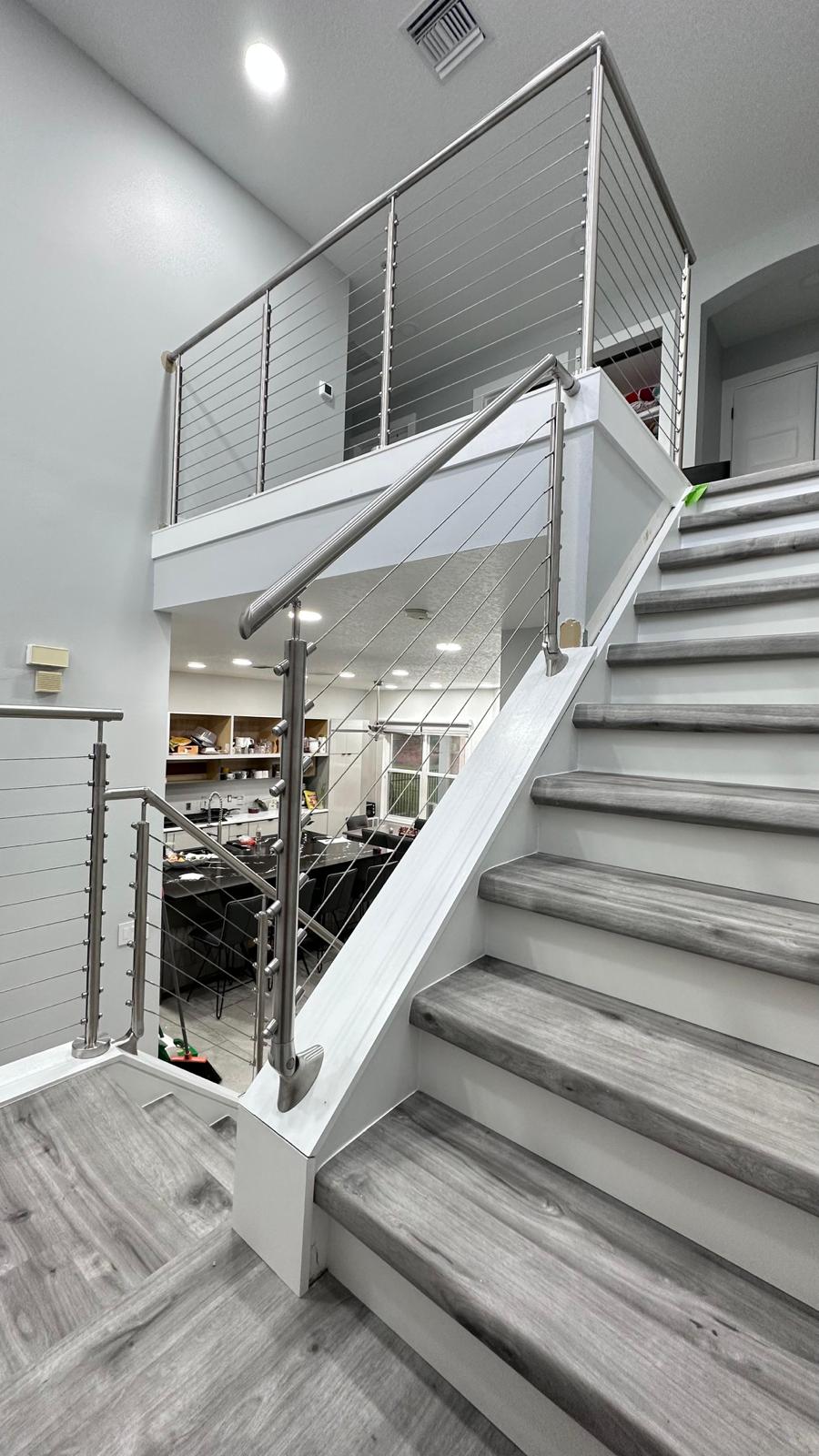
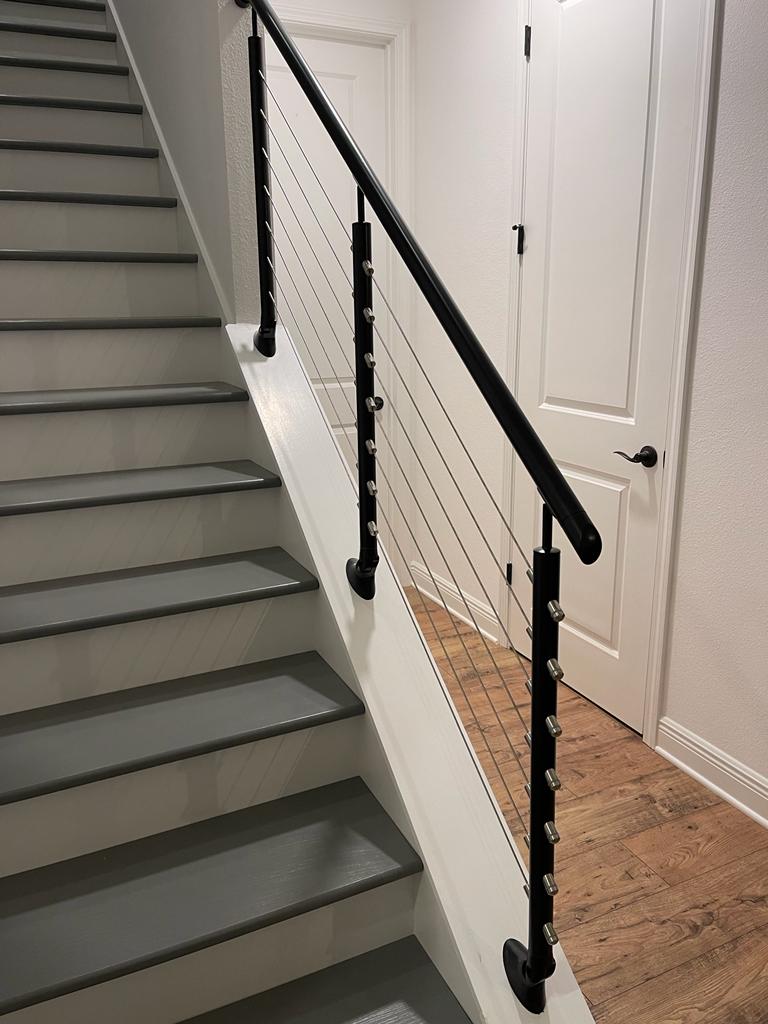
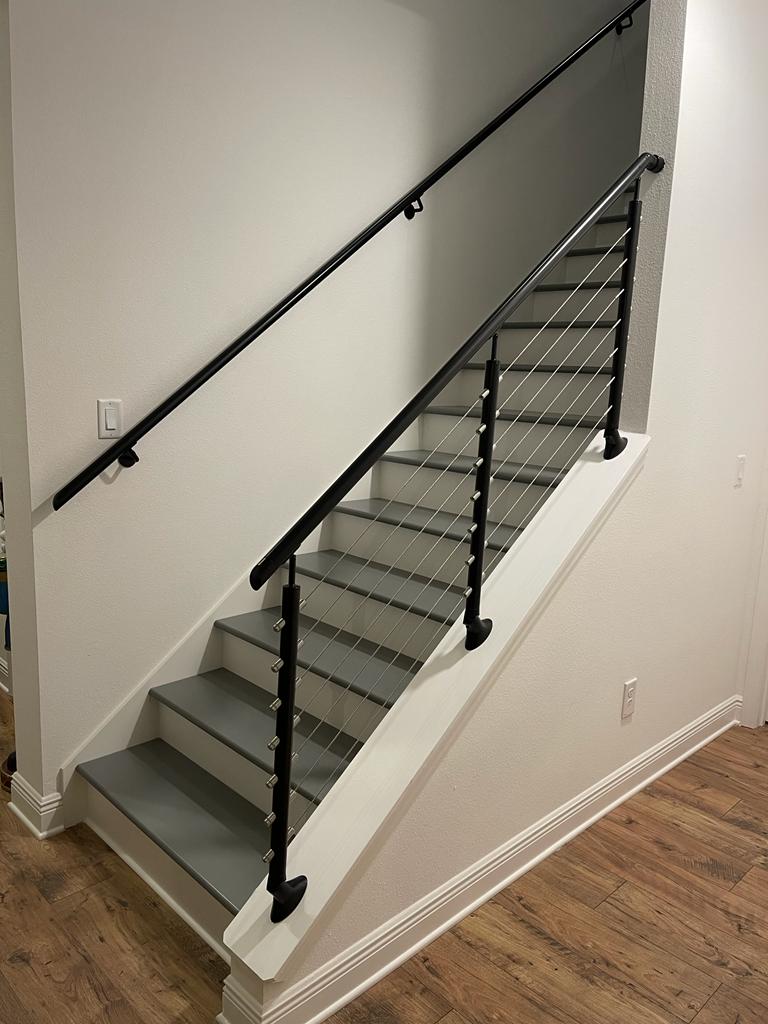
Yes. On a raked run the cables follow the stair angle, which is one of the cleanest guards available on a floating staircase. Stair applications need particular attention at the terminal posts, because every cable transfers its tension into them at an angle.
Very little. A periodic fresh-water rinse in coastal locations and an occasional wipe-down is generally all that is needed. There is no painting or refinishing cycle, which is a large part of why cable is popular on exposed decks and waterfront terraces.
Glass gives the clearest view and costs the most. Cable gives close to the same openness at a lower number and handles long runs and corners better. Rod is quieter than cable, needs no tensioning, and reads warmer indoors. We will price more than one on the same drawing so you can compare.
Send us the run.
We'll send back a real number.
Drawings, photos or a rough idea — all we need to start. Itemized estimate, no obligation.
Let's build
the guard.
Send drawings, photos, or a rough idea. Homeowners, builders, GCs and architects all start the same way.
Reply within 24 hours
A real person reviews every request — not an auto-responder.
Itemized, no-obligation estimate
Scoped by run length, post spacing, finish and engineering.
Builder & GC packages
Phased installation and draw scheduling for multifamily and commercial contracts.
Request a Quote
Licensed & insured · Statewide Florida