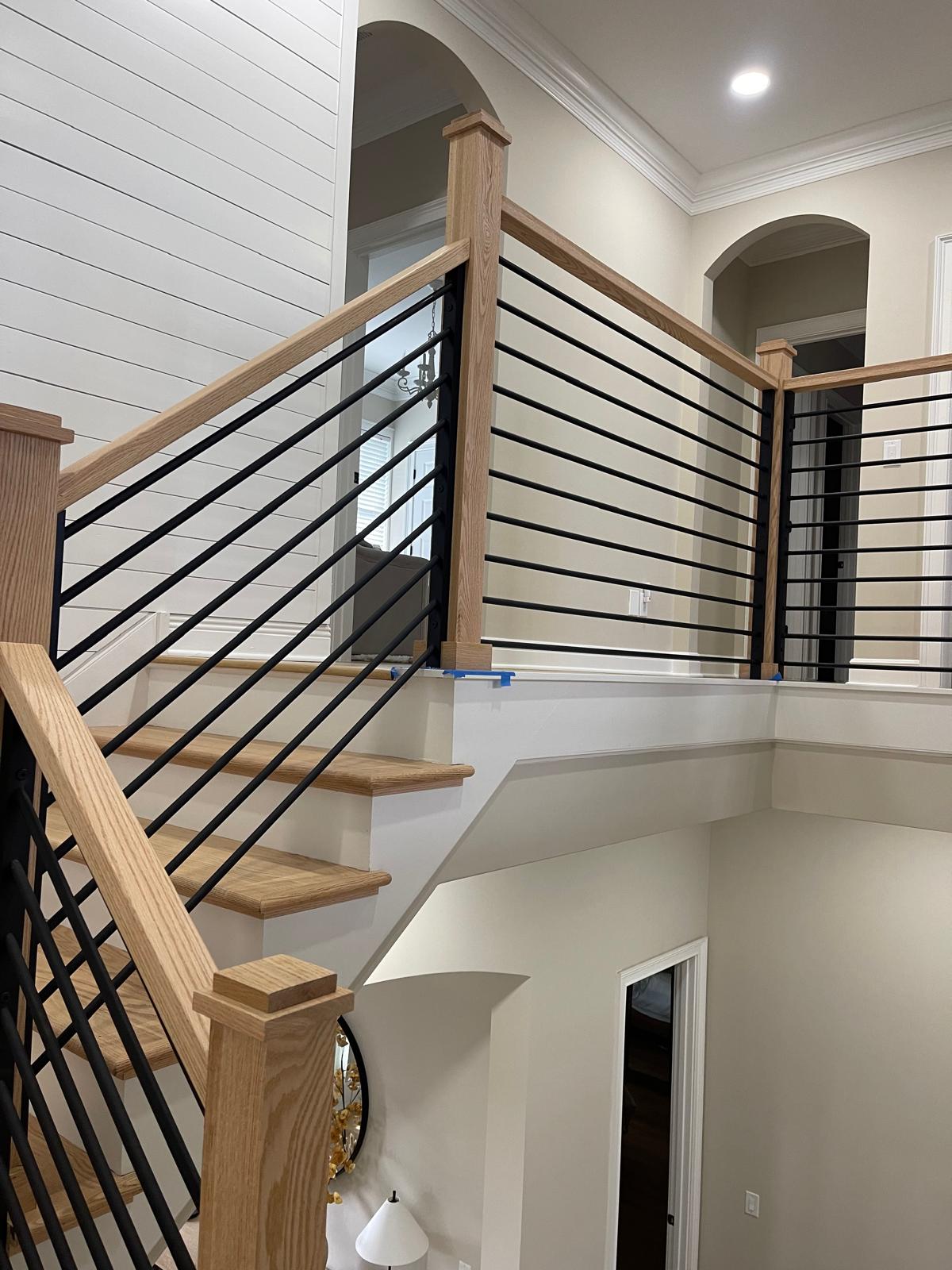
Rod Railing. Quieter than cable, warmer than glass.
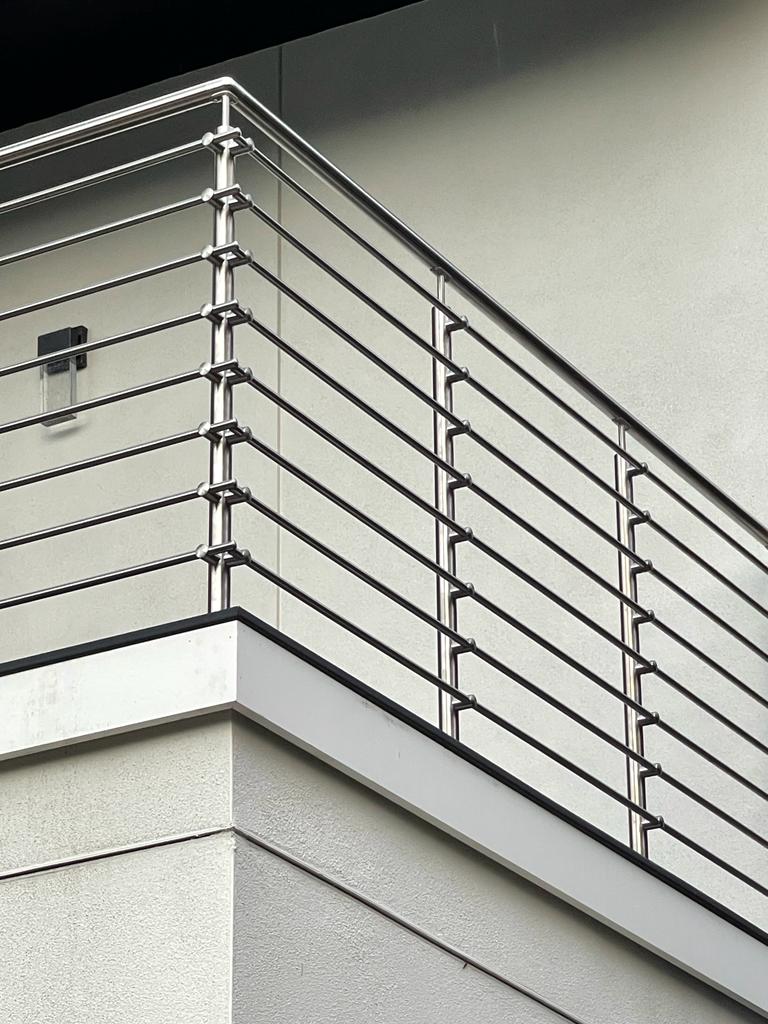
Solid horizontal rod infill in blackened, powder-coated or 316 stainless steel — rigid, nothing to tension, and unmistakably architectural. Engineered to Florida code, fabricated in our own shop, installed by our own crews.
Rigid infill, no tension to lose.
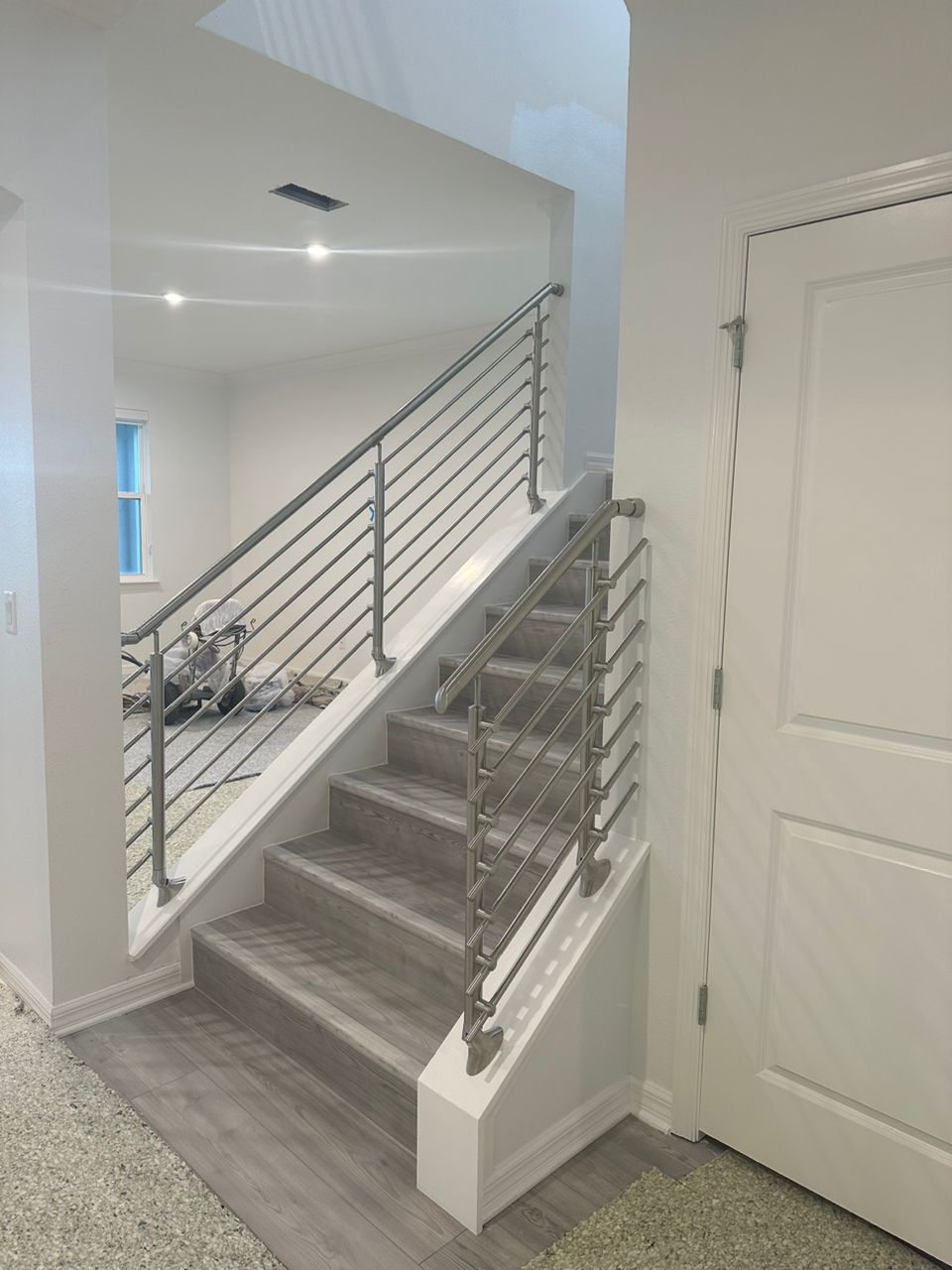
Rod railing runs solid horizontal metal bars as the guard infill instead of glass panels, tensioned cable or vertical pickets. The rods pass through or terminate into structural posts, and because they are rigid rather than tensioned, the spacing you install is the spacing that stays.
That single property removes the biggest failure mode in cable railing. There is nothing to re-tension, nothing to sag, and no accumulated pull for the terminal posts to fight.
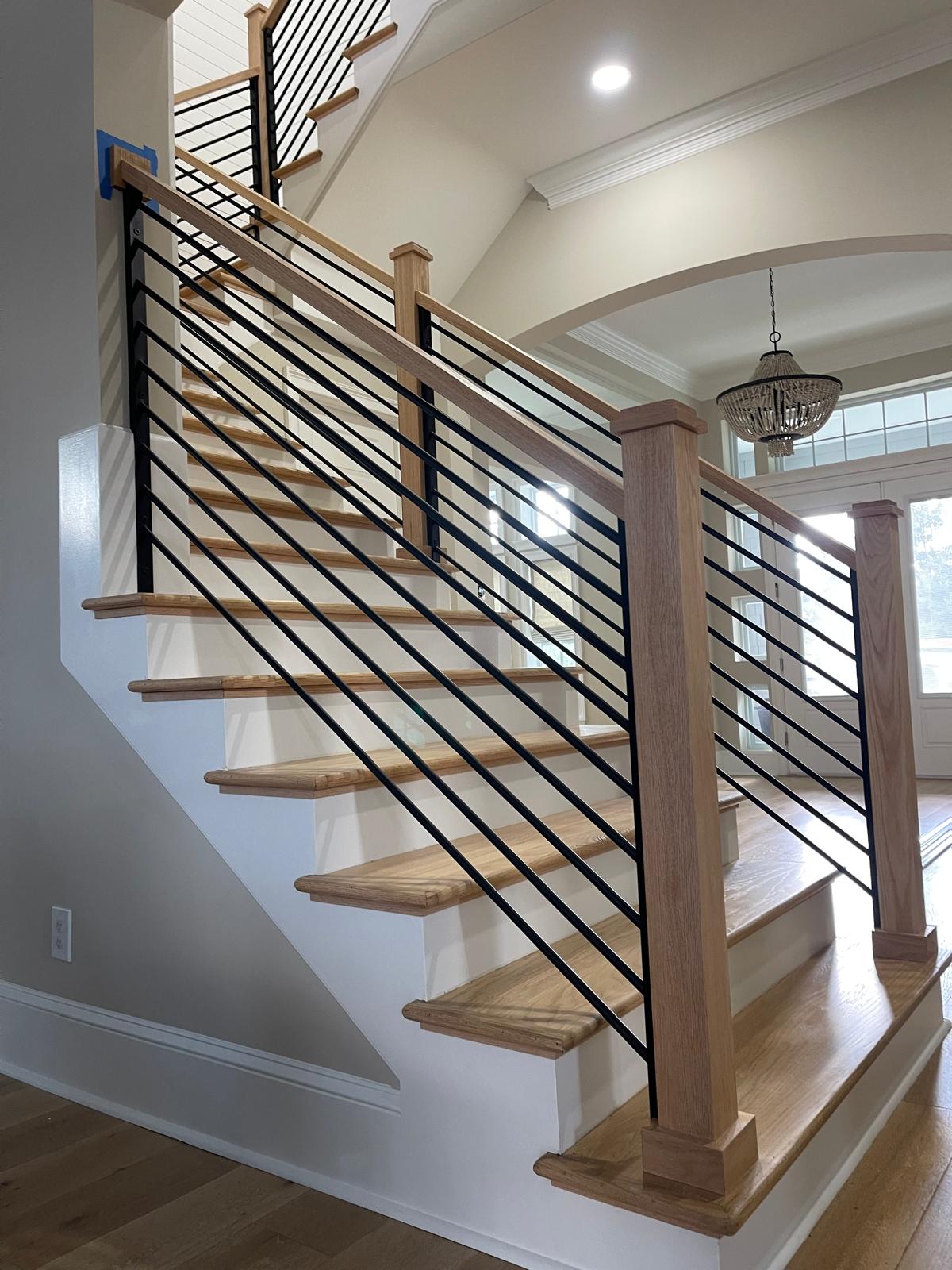
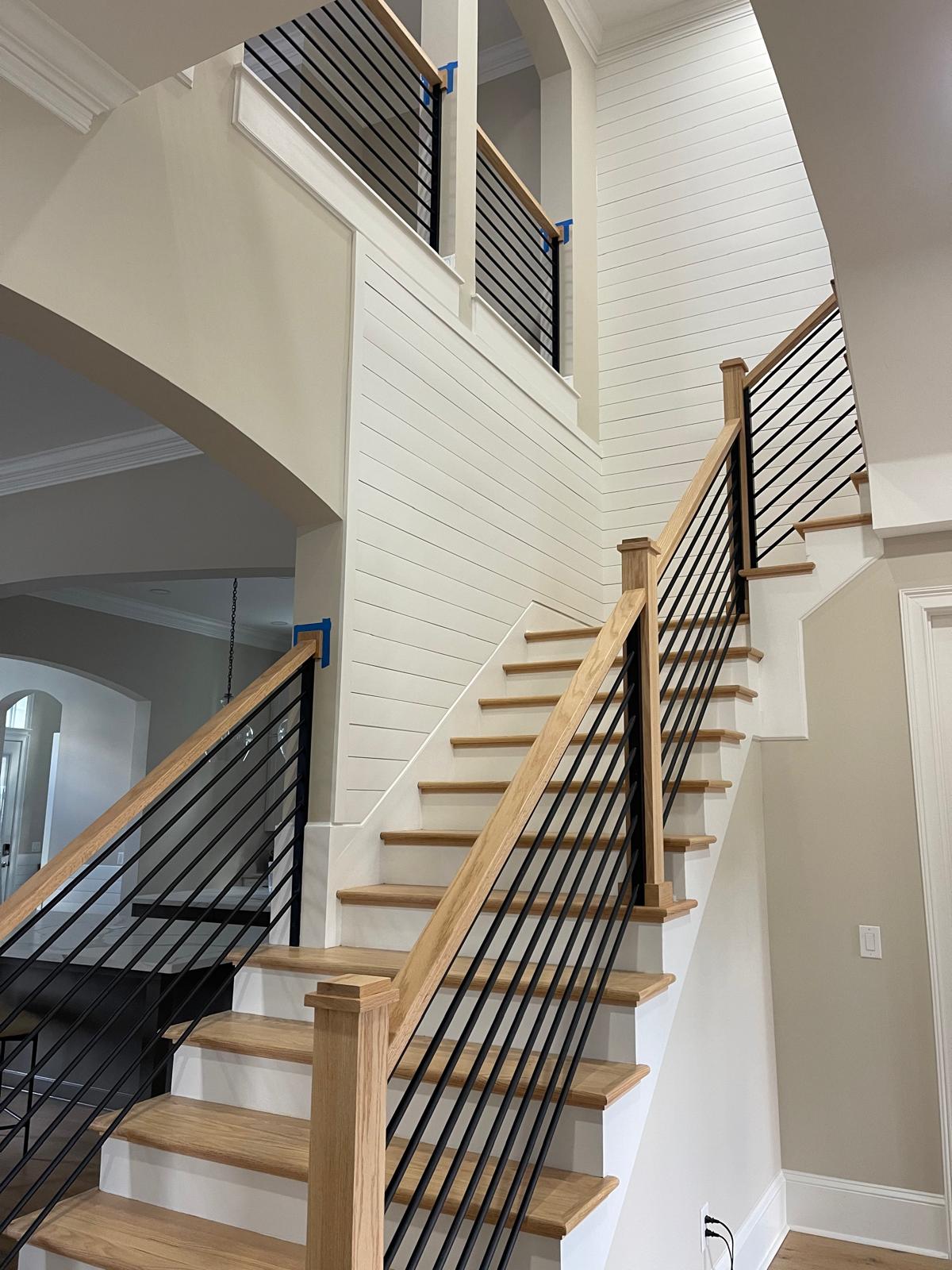
Visually it sits between the other two systems. Rod is thicker than cable, so it reads as a deliberate line rather than disappearing. Against timber treads and warm interiors that is usually an advantage, not a compromise — it is the system architects reach for when they want the guard to be part of the design rather than absent from it.
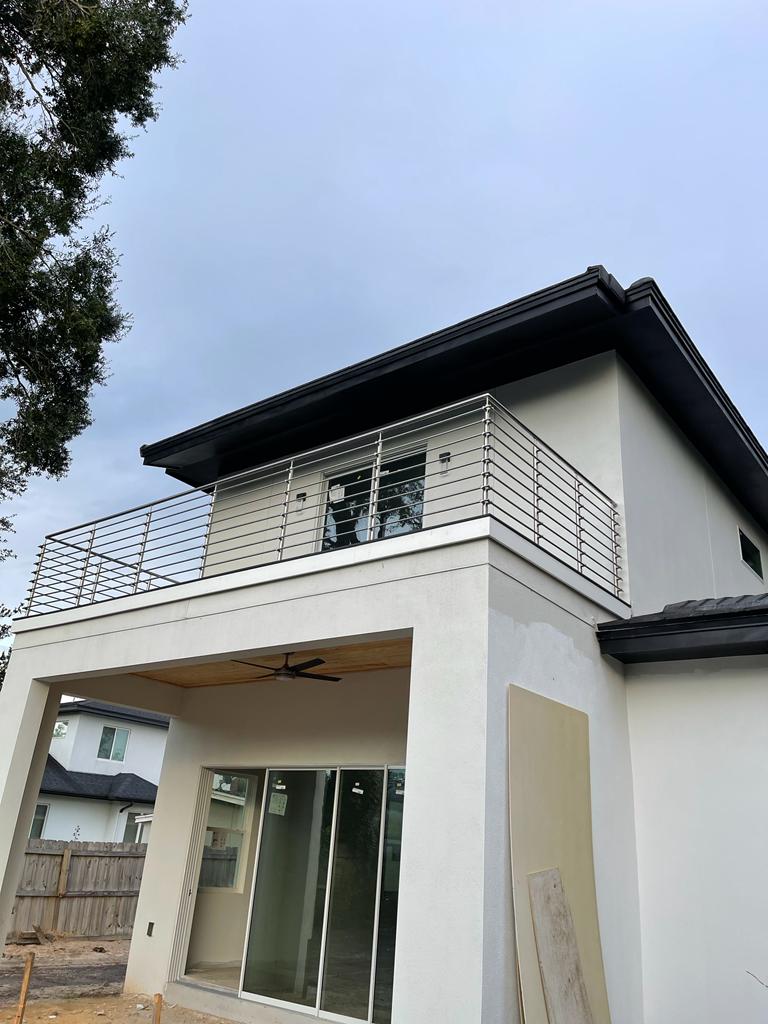
We fabricate, finish and install statewide across Florida, with 316 stainless specified as standard on anything exposed to salt air.
Rod, cable or glass?
We build all three, so we have no reason to push one. Here is how they actually differ.
Rod
Rigid, no tensioning, no maintenance cycle. Reads warm and deliberate indoors. Best interior choice, and the most forgiving to install correctly. Mid-range on cost.
Cable
Thinner, so it vanishes more completely at an angle. Better on very long exterior runs and more economical over distance. Depends entirely on correct tension and stiff terminal posts. Cable railing →
Glass
The clearest possible view and the highest cost. Needs floor depth for base shoe or a suitable substrate for standoffs. The right answer when a water view is the whole point. Glass railing →
Finish decides where it can live.
The single most important rod-railing decision in Florida is material, not style. Get it wrong on an exterior and it will tell you within a year.
Built and installed.
 Fabricated In House · Never a stock kit
 Engineered, Not Assembled · Stamped structural drawings
 Licensed Florida Contractor · CBC1270705
 500+ Projects Delivered · Across 94 Florida cities
Rod railing, answered.
Solid horizontal metal rods used as the guard infill instead of glass panels, tensioned cable or vertical pickets. The rods pass through or terminate into structural posts. Because they are rigid rather than tensioned, they never require the terminal-post engineering that cable railing depends on.
Neither is better in general — they solve different problems. Rod is rigid, needs no tensioning and never needs re-tensioning, and reads warmer indoors. Cable is thinner so it disappears more completely at an angle, and handles very long runs more economically. Rod is usually the better interior choice; cable is usually the better exposed-deck choice.
Yes. The Florida Building Code limits the opening between guard members, so rod spacing is set to prevent a sphere of the prohibited diameter passing through. Because the rods are rigid, the spacing you install is the spacing that stays — they cannot be spread apart the way an under-tensioned cable can.
Blackened steel, powder coating in any specified color, and 316 stainless. Blackened steel is the most common architectural choice for interiors. For coastal and exterior work we specify 316 stainless, because painted or blackened carbon steel will corrode in salt air.
Yes, but the material specification changes. Exterior and coastal rod railing should be 316 stainless rather than blackened carbon steel, with isolation at dissimilar-metal connections. Blackened or powder-coated carbon steel is best kept to interiors in a coastal climate.
Very well. Rod infill on a floating staircase keeps the open-riser effect while giving the guard a deliberate architectural line. It is one of the most requested pairings we build.
Send us the run.
We'll send back a real number.
Drawings, photos or a rough idea — all we need to start. Itemized estimate, no obligation.
Let's build
the guard.
Send drawings, photos, or a rough idea. Homeowners, builders, GCs and architects all start the same way.
Reply within 24 hours
A real person reviews every request — not an auto-responder.
Itemized, no-obligation estimate
Scoped by run length, post spacing, finish and engineering.
Builder & GC packages
Phased installation and draw scheduling for multifamily and commercial contracts.
Request a Quote
Licensed & insured · Statewide Florida